1031 Exchange Strategies for South Bay Property Owners
Published January 25, 2026
How South Bay property owners use 1031 exchanges to defer capital gains taxes, including timelines, strategies, and real examples from the market.
1031 Exchange Strategies for South Bay Property Owners
If you own rental property in the South Bay and have seen significant appreciation, which is most of you at this point, then understanding 1031 exchanges is not optional. It is one of the most powerful wealth building tools available to real estate investors, and getting it wrong can cost you hundreds of thousands of dollars. I have guided dozens of our property management clients through exchanges over the past 15 years, and here is what you need to know.
What a 1031 Exchange Does
Section 1031 of the Internal Revenue Code allows you to defer capital gains taxes when you sell an investment property, provided you reinvest the proceeds into a like kind property. The key word is defer. Deferring means the tax bill still comes due someday, just not now. But as any accountant will tell you, a dollar of tax deferred is worth more than a dollar of tax paid today, and many investors use serial 1031 exchanges throughout their lifetime, effectively deferring gains indefinitely.
The California Tax Bite Without an Exchange
Let me explain why this matters so much for South Bay owners specifically. California has no state level capital gains exclusion for investment property. When you combine federal capital gains tax, the net investment income tax, California state income tax, and depreciation recapture, your combined tax rate can easily exceed 35 percent of your gain.
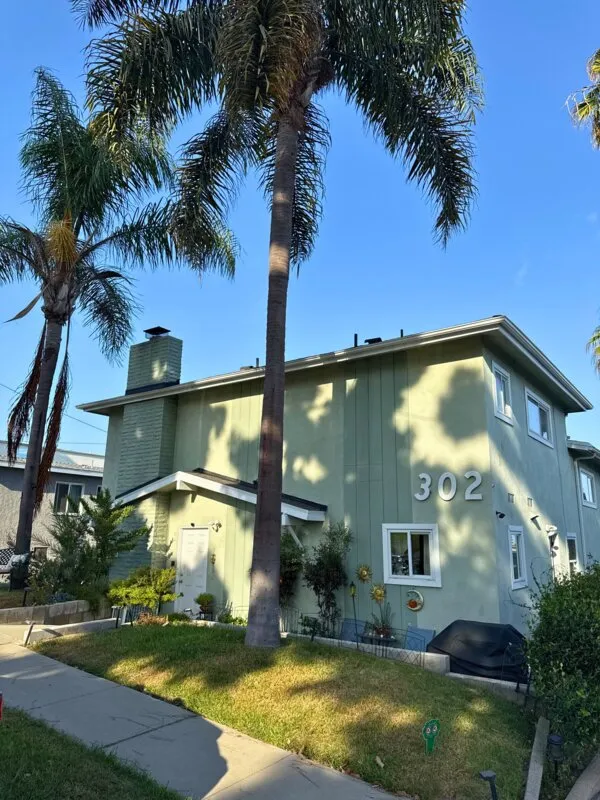
Here is a real world example using numbers similar to what we see with our clients. Say you purchased a duplex in El Segundo 12 years ago for $750,000. Today it is worth $1,500,000. Your adjusted basis after 12 years of depreciation is roughly $585,000. That means your taxable gain, including depreciation recapture, is approximately $915,000. At a combined effective rate north of 35 percent, your tax bill would be roughly $320,000.
That $320,000 could be working for you in a larger property generating more cash flow. A 1031 exchange lets you keep that $320,000 invested instead of sending it to the IRS and the Franchise Tax Board.
The Timeline: Two Dates That Cannot Move
There are two deadlines in a 1031 exchange that are absolutely firm. The IRS does not grant extensions for any reason.
You have 45 calendar days from the date you sell your relinquished property to identify your replacement property or properties. This is the identification period. You must provide a written, signed identification to your qualified intermediary listing the properties you are considering. You can identify up to three properties regardless of value, or more than three if their combined value does not exceed 200 percent of the property you sold.
You have 180 calendar days from the date of sale to close on the replacement property. This is the exchange period. If day 180 falls on a weekend or holiday, you do not get an extension to the next business day. Plan accordingly.
These deadlines are the source of most exchange failures. If you miss day 45 or day 180 by even one day, the exchange fails and you owe the full tax.
Strategies That Work
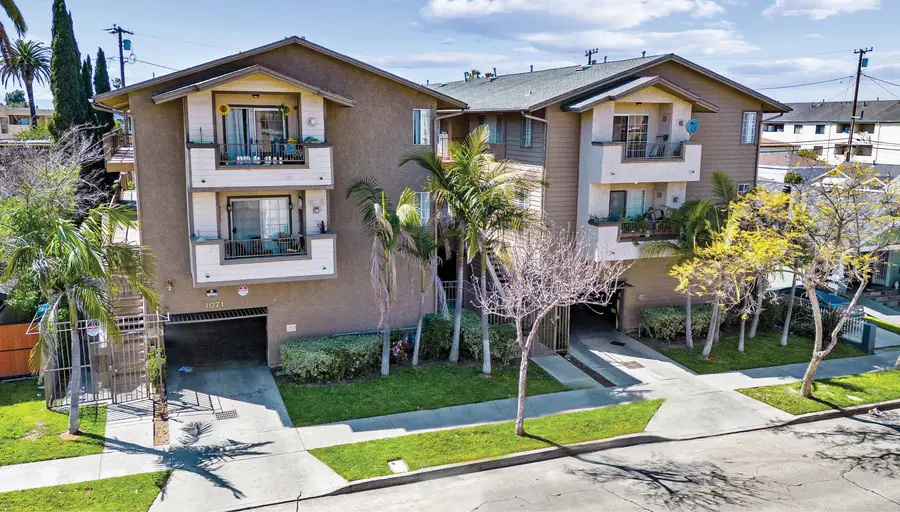
Trading Up. This is the most common strategy we see with our South Bay clients. You sell a smaller property, like that El Segundo duplex, and purchase a larger property, say a 12 unit building in Torrance or Long Beach. You are exchanging equity in a high per unit cost market for more doors in a market where the per unit acquisition cost is lower. More units means more cash flow and more diversification across tenants. It often means a better return on equity too.
Geographic Diversification. Some of our clients use exchanges to move capital from high cost, low yield South Bay properties into higher yielding markets. Like kind property includes any real estate held for investment purposes, so you can exchange a South Bay duplex for an apartment building in Phoenix, a commercial property in Dallas, or a portfolio of properties across multiple states. California tracks 1031 exchanges into out of state property using Form 593, and they will expect to collect their share of the state tax when you eventually sell the replacement property or break the exchange chain.
Delaware Statutory Trust as Backup. The 45 day identification deadline creates enormous pressure. What if you cannot find a suitable replacement property in time? A Delaware Statutory Trust, or DST, can serve as a backup identification. A DST is a passive fractional interest in a larger institutional quality property. It qualifies as like kind real estate for 1031 purposes. You may not want to park your entire exchange proceeds in a DST, but identifying one as your third option on day 44 can save an exchange that would otherwise fail.
The Boot Problem
Boot is the term for any value received in an exchange that is not like kind property. There are two types that trip people up.
Cash boot occurs when you do not reinvest all of your proceeds. If you sell for $1,500,000 and only purchase a replacement for $1,300,000, that $200,000 gap is cash boot and it is taxable.
Mortgage boot occurs when the debt on your replacement property is less than the debt on the property you sold. If your relinquished property had a $500,000 mortgage and your replacement only has a $300,000 mortgage, the $200,000 difference is mortgage boot, which is taxable.
The safest approach is to reinvest all proceeds and take on equal or greater debt. Some investors intentionally take a small amount of boot because they need the cash, but you should decide that up front rather than discover it after the fact.
Reverse Exchanges
A standard exchange is sell first, buy second. A reverse exchange flips that order. You purchase the replacement property first, then sell your original property within 180 days.
Reverse exchanges are more complex and more expensive because the replacement property must be held by an Exchange Accommodation Titleholder until the exchange is completed. The EAT fees, additional legal work, and potential financing complications mean reverse exchanges typically cost $15,000 to $25,000 more than a standard forward exchange.
But in a competitive market like the South Bay, a reverse exchange can be invaluable. If you find the perfect replacement property before you have sold your current one, a reverse exchange lets you lock it up rather than risk losing it while your sale closes.
Qualified Intermediary Requirements
The IRS requires that a qualified intermediary, sometimes called an accommodator, hold the exchange proceeds between the sale and purchase. You cannot touch the money. If the proceeds hit your bank account, even for a day, the exchange is disqualified.
Your QI should be a dedicated exchange company, not your real estate attorney or title company acting in a dual role. The QI industry is largely unregulated, so choose carefully. Look for companies that segregate client funds, carry fidelity bonds, and have been in business for at least 10 years.
California Form 593
California is one of the few states that actively tracks 1031 exchanges, particularly when replacement property is located out of state. Form 593 is filed at closing and California uses it to monitor whether exchange proceeds ultimately come back into the state's tax jurisdiction. If you exchange a California property for one in Nevada, California notes it and will expect their tax when the chain breaks.
Planning Timeline
If you are considering a 1031 exchange, start planning 6 to 12 months before you intend to sell. This gives you time to identify potential replacement markets, get pre approved for financing on the replacement, and line up your QI and legal team.
The worst position to be in is selling your property and then scrambling during the 45 day identification period to figure out where to reinvest. That pressure leads to bad decisions, overpaying for replacement properties, or failing to identify anything suitable and losing the exchange entirely.
We walk our property management clients through this process regularly, and the ones who plan ahead consistently get better outcomes than the ones who decide to exchange on the day they accept an offer.
Topics: 1031 exchange, capital gains, tax strategy, south bay real estate, investment property, california
Get a free management quote
Back to the Schofield Properties blog
Schofield Properties is a family run property management company at 323 Richmond St, El Segundo, CA 90245. We have managed the South Bay since 1972 and personally oversee about 186 doors today. Book a call to talk about your property.
_1771595201102_optimized-600-hSjj9YMN.webp)
_1771595201094_optimized-DUHa1RXZ.webp)