Passive Income From South Bay Rental Properties: A Realistic Guide for Busy Professionals
Published January 5, 2026
Rental property income isn't truly passive until you have professional management in place. Here's what the real numbers look like for busy professionals.
The real estate influencers will not tell you this, so I will: rental property income is not passive. At least not until you have professional management in place. And even then, "passive" means two hours a month reviewing reports instead of fifteen hours a month fielding maintenance calls and chasing rent.
I have managed more than 200 units in the South Bay over 15 years, and most of our investor clients fit a very specific profile. They are doctors, attorneys, engineers, and tech executives earning between $300,000 and $800,000 per year. They are smart people with almost no spare time. They want their money working for them, but they do not have 15 hours a month to manage a building. That is where professional management turns a time consuming asset into something that genuinely approaches passive income.
Let me walk you through the real numbers of South Bay rental investment.
Running the Numbers on an 8 Unit Building
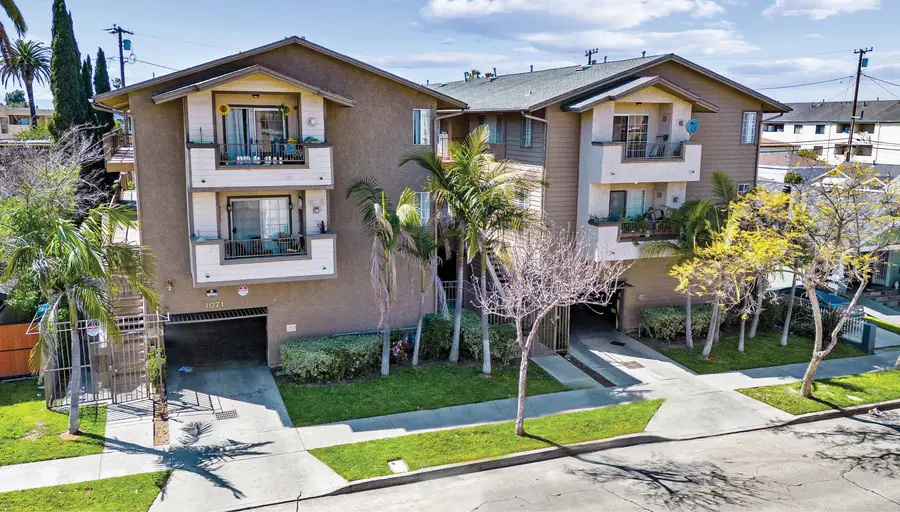
Take a typical 8 unit building in the South Bay, purchase price $2,000,000. Average rent of $2,000 per unit gives you $16,000 per month in gross rental income, or $192,000 per year.
At a 5% cap rate, your net operating income before debt service is roughly $100,000 per year. That accounts for property taxes, insurance, maintenance, management fees, and reserves.
With 25% down, your equity investment is $500,000. You are financing $1,500,000 at current rates around 6.5%, which puts your annual debt service at approximately $114,000.
That leaves $6,000 to $7,000 per month in pre tax cash flow. Not life changing money on a $500,000 investment, which is roughly a 14% to 17% cash on cash return. But cash flow is only part of the story in the South Bay.
The Wealth Acceleration Tools
The real wealth in South Bay rental property comes from three sources that work together over time.
Appreciation in coastal Los Angeles has averaged 5% to 7% annually over the past 30 years. On a $2,000,000 property, that is $100,000 to $140,000 per year in equity growth. This is not guaranteed, but the supply constraints in the South Bay, where new construction is extremely limited, create structural upward pressure on values.
Depreciation provides a paper loss of approximately $72,000 per year on a $2,000,000 building (excluding land value). For high income earners in the 37% tax bracket, that translates to real tax savings of roughly $26,000 annually, depending on your specific situation and whether you qualify as a real estate professional.
1031 exchanges allow you to defer capital gains taxes when you sell and reinvest in a larger property. The wealth building strategy we see our most successful clients use is trading up every five to seven years. Buy an 8 unit building, let it appreciate and pay down the mortgage, then exchange into a 16 unit building with the accumulated equity. Over 20 years, that compounding is where the real money gets made.
Why the South Bay Specifically
Not all rental markets are created equal, and the South Bay has structural advantages that make it one of the strongest rental markets in the country.
Supply is permanently constrained. Coastal cities like El Segundo, Manhattan Beach, Hermosa Beach, and Redondo Beach have virtually no land available for new multifamily construction. Torrance and Hawthorne have more development potential but still face significant entitlement challenges. When supply cannot expand to meet demand, rents and values hold up even in downturns.
Aerospace and defense employment provides a stable, high income tenant base. SpaceX, Boeing, Northrop Grumman, Raytheon, and dozens of defense contractors employ tens of thousands of workers within a 15 minute commute of most South Bay rental properties. These tenants earn well above the income thresholds we screen for, they tend to stay for years, and clearance holders are extraordinarily reliable renters.
Vacancy rates in the South Bay consistently run under 4%, compared to the Los Angeles County average of 5% to 6%. Lower vacancy means higher effective income and more predictable cash flow.
The Time Commitment Reality
Self managed, an 8 unit building will consume 10 to 15 hours per month of your time. That includes fielding maintenance requests, coordinating vendors, collecting rent, handling tenant communications, managing turnovers, staying current on legal requirements, and dealing with the occasional emergency at 2 AM.
Professionally managed, your time commitment drops to roughly 2 hours per month. You review a monthly financial report, make decisions on any capital expenditure recommendations, and discuss strategy with your property manager. That is the whole job, and it is the closest rental property gets to passive.
Management fees typically run 6% to 10% of gross rents. On our example 8 unit building at $16,000 per month, that is $960 to $1,600 per month. Many investors view this as an expense. I view it as the purchase price of your time. If you earn $400,000 per year, your time is worth roughly $200 per hour. Spending 15 hours per month on property management is costing you $3,000 in opportunity cost. The management fee pays for itself.
Getting Started
If you are evaluating South Bay rental properties, here is what I would focus on.
Look for below market rents. The best deals are not necessarily the cheapest buildings. They are buildings with long term tenants paying rents 15% to 20% below market. You buy the building at a cap rate based on current income, then gradually bring rents to market as tenants turn over. This creates value without spending a dollar on improvements.
Avoid deferred maintenance. A building that needs a new roof, plumbing overhaul, or electrical upgrade will eat your first two to three years of returns in capital expenditures. Get thorough inspections and budget accordingly.
Focus on location relative to employers and transit. Units near the Metro Green Line stations in Hawthorne and Redondo Beach, or within a short commute of El Segundo's aerospace corridor, lease faster and retain tenants longer.
Where the deals are right now: Hawthorne, Lawndale, and Gardena offer the best value play with strong rent growth potential. El Segundo and Torrance command premium prices but deliver premium tenant quality and lower management intensity.
South Bay rental property is one of the best places to build wealth in this state, provided you go in with realistic expectations about what it takes. If you are weighing a specific building or neighborhood, I am glad to sit down and run the numbers with you.
Topics: investing, south bay, passive income, rental properties, 1031 exchange
See what your property could rent for · Get a free management quote
Back to the Schofield Properties blog
Schofield Properties is a family run property management company at 323 Richmond St, El Segundo, CA 90245. We have managed the South Bay since 1972 and personally oversee about 186 doors today. Book a call to talk about your property.
_1771595201102_optimized-600-hSjj9YMN.webp)
_1771595201094_optimized-DUHa1RXZ.webp)