How Old Is Torrance's Rental Stock, and What Does That Trigger for Landlords in 2026?
Published July 15, 2026
Roughly two thirds of Torrance homes were built before 1970, so federal lead paint disclosure applies to most rentals.
Roughly two thirds of Torrance's housing was built before 1970, and federal law requires lead paint disclosure on any home built before 1978. That covers most of the city's rental stock. Before a tenant signs, you must give an EPA lead pamphlet, a signed disclosure of any known lead based paint, and a lead warning statement in the lease. Skipping it risks a civil penalty of $22,263 per violation.
Torrance is an older housing market
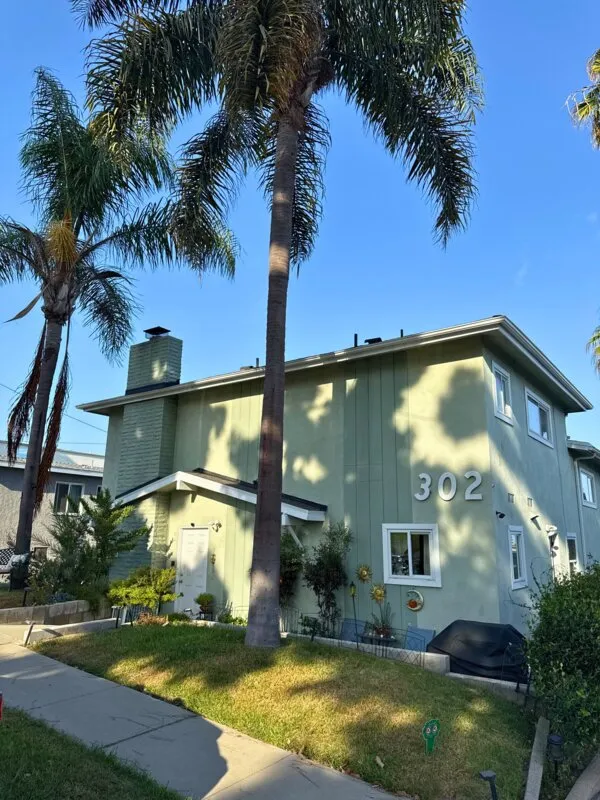
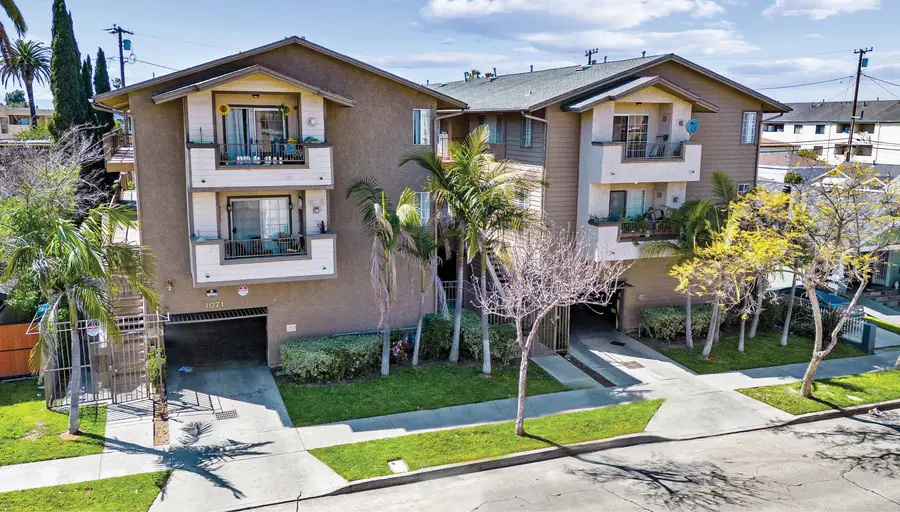
Torrance grew up in the postwar boom, and its rental stock shows it. Census American Community Survey data compiled by NeighborhoodScout puts about 67 percent of Torrance homes as built between 1940 and 1969, with another slice built before 1939. The Southern California Association of Governments local profile points to a similar picture, with a median construction year in the early 1960s. The exact percentage moves a little depending on the source and the year of the ACS release. The headline does not move. Most homes you own or manage in Torrance predate 1978, and that single year is the line that federal lead law draws.
Why 1978 is the number that matters
The federal cutoff is not 1970. It is 1978, the year the Consumer Product Safety Commission banned lead based paint in housing. Under the Residential Lead Based Paint Hazard Reduction Act of 1992, codified at 42 U.S.C. section 4852d and often called Title X, any owner renting a home built before 1978 has three duties before a lease is signed. The rules are implemented at 24 CFR Part 35 and 40 CFR Part 745.
The three things you owe every tenant
First, give the tenant the EPA approved pamphlet, "Protect Your Family From Lead in Your Home." Second, disclose in writing any known lead based paint or lead hazards in the unit, and hand over any reports you have. If you know of nothing, you still disclose that you have no knowledge. Third, include a lead warning statement in the lease and have the tenant sign an acknowledgment. Keep that signed record for at least three years. There is no requirement that you test or remediate. The law is about disclosure, not repair.
What it costs to get this wrong
This is where owners get surprised. The maximum civil penalty for a disclosure violation is currently $22,263 per violation, the figure set by the EPA's inflation adjustment table at 40 CFR 19.4. That amount is adjusted for inflation every January, so confirm the current number before you rely on it. Under 42 U.S.C. section 4852d, a knowing violation can also expose you to triple the damages a tenant suffers. One missing signature on one lease is one violation. Across a portfolio of pre-1978 units, the exposure adds up fast, and it is entirely avoidable with a one page form.
A note on local rules
Torrance does not run a proactive rental inspection or registration program aimed at older housing. The city handles property condition through general code enforcement and nuisance rules rather than a rental registry. So the binding requirement here is federal, not municipal. That is good news in one sense. The rule is the same on every pre-1978 Torrance lease, so you can standardize it once and apply it everywhere.
What this means for you
If you own in Torrance, assume the lead disclosure applies unless you can prove the unit was built in 1978 or later. Build the pamphlet, the disclosure form, and the lease warning statement into your standard signing packet so it never gets skipped. Keep the signed copies. The paperwork takes minutes. The penalty for missing it does not.
We handle this on every older unit we manage, so the disclosure is already in the packet before a tenant ever picks up a pen. If you would rather not police it lease by lease, that is one of the quiet things we take off your plate.
This is general information, not legal or tax advice. Confirm with a licensed professional before you act.
Sources
- 42 U.S.C. section 4852d, Residential Lead Based Paint Hazard Reduction Act: https://www.law.cornell.edu/uscode/text/42/4852d
- EPA, Lead Based Paint Disclosure Rule (Section 1018 of Title X): https://www.epa.gov/lead/lead-based-paint-disclosure-rule-section-1018-title-x
- 40 CFR Part 745, Subpart F (implementing regulation): https://www.ecfr.gov/current/title-40/chapter-I/subchapter-R/part-745/subpart-F
- 40 CFR 19.4, civil penalty inflation adjustment table ($22,263 per violation): https://www.law.cornell.edu/cfr/text/40/19.4
- NeighborhoodScout, Torrance real estate and housing age (ACS/Census based): https://www.neighborhoodscout.com/ca/torrance/real-estate
- U.S. Census Bureau, ACS DP04 selected housing characteristics, Torrance: https://data.census.gov/table/ACSDP5Y2023.DP04?g=160XX00US0679800
Last verified: July 2026.
Topics: compliance, lead paint disclosure, torrance, older housing, federal law, rental compliance
Get a free management quote
Back to the Schofield Properties blog
Schofield Properties is a family run property management company at 323 Richmond St, El Segundo, CA 90245. We have managed the South Bay since 1972 and personally oversee about 186 doors today. Book a call to talk about your property.
_1771595201102_optimized-600-hSjj9YMN.webp)
_1771595201094_optimized-DUHa1RXZ.webp)